thatPOTSlife

Empowered, informed, and a little light‑headed

Back when I was healthy enough to walk around outside

My name is Amanda Hargrave, and I have somatoform autonomic dysfunction – inappropriate sinus tachycardia, POTS, and gastroparesis. I want to spread awareness, first-hand experience, and hope. Feel free to reach out if you have any questions, or if you just want to share your own experience! 

  • I wanted to share just part of my ongoing journey of being diagnosed. I say ongoing, because this crap is never ending. I won’t go into much detail on my symptoms or specifics on bad days, just because it is so much that my son and husband might start thinking I have abandoned them. I will do weekly post about current hard days and symptoms and maybe more specifics at a later time. 

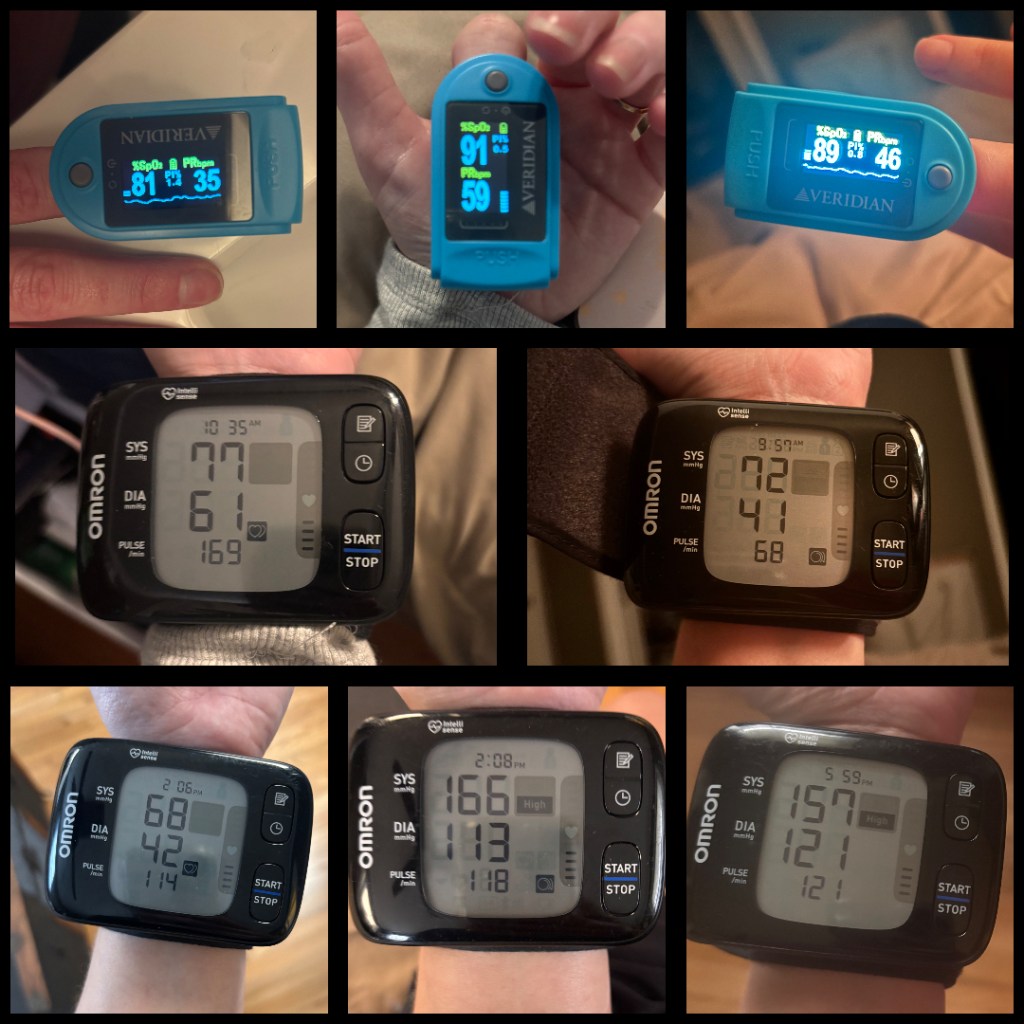
    April 2024 I started getting sick. I was throwing up all the time, losing weight (let’s be real, I needed to lose some weight anyway), having GI issues, difficulty swallowing food, but the big thing was I would pass out literally every single time I stood up and walked more than about five feet. I spent the next two months going to the Doctor and being a human pin cushion. I cannot even guess the number of test that I had, but of course most things came back normal (I say most, but since I was also having food issues, my labs were all abnormally normal). One night I couldn’t stop throwing up, I just felt awful in general, and my husband couldn’t watch anymore, so he made me go to the hospital. At the hospital my blood pressure was so low, they kept retaking it thinking that something was reading wrong. Long story short I was admitted and it was suggested that I get the gastric emptying test done because they were thinking it was gastroparesis……which it was. I just didn’t realize that it was more than that. I tried every medicine under the sun and even some from out of the country (chill…it was still Doctor recommended and prescribed), but nothing worked. I was also put on midodrine for low blood pressure. 

    Things seemed to level out for a while. I left my job for my dream job, and I felt on top of the world. Of course, the lifestyle changes I had to make for the gastroparesis sucked, but I was happy. My marriage was great, my son was great, my job was freaking awesome. But in February 2025, I started getting sick again. I’ll spare you the symptoms because let’s be real, it’s too many to list anyway. At the beginning of March 2025, I had to take a leave from work, I ended up in the hospital again and things were just bad (at least at the time I thought they were bad). I went through months of doctor appointments, tests, being practically bed bound and things just got worse each month. I eventually had to resign from work because it was clear I would not be well enough to return anytime soon anyway. I finally had a doctor tell me that they thought it could be POTS, but most people around here don’t test for it because there is no cure anyway (yes, that was what she said). I was finally able to find a Cardiologist who diagnosis it, and after a 6 month wait, she gave me this diagnosis: somatoform autonomic dysfunction: a combination of inappropriate sinus tachycardia, POTS, orthostatic hypotension, on top of my gastroparesis. 

    ← Back

    Thank you for your response. ✨

  • If you’ve heard the term POTS and wondered what it means, you’re not alone. POTS is a common, yet often misunderstood, condition that affects how the autonomic nervous system regulates heart rate, blood pressure, and blood flow.

    What is POTS exactly (in plain terms)

    POTS stands for Postural Orthostatic Tachycardia Syndrome. It is a collection of disorders that affect the body’s ability to adjust to standing up from a lying or seated position. What Doctor’s consider a hallmark feature is the fast heart rate (tachycardia) that happens when you move to an upright position. Although if you have POTS, you know that it is much more than just that. 

    One thing I have learned is that experiences vary from person to person, from day to day. However, according to Doctor’s these are some common ones: 

    • Rapid heartbeat upon standing
    • Lightheadedness or dizziness, sometimes leading to fainting (syncope)
    • Fatigue or “brain fog”
    • Palpitations (feeling the heart beating strongly or irregularly)
    • Headache, nausea, or blurred vision
    • Chest discomfort or shortness of breath (less common but reported)
    • Heat intolerance or excessive sweating
    • Tiredness after meals or prolonged standing
    • Sleep disturbances  

    What can cause POTS (the shorter version) 

    POTS is not always caused by one factor, and for many people, it is a mix of things. Some common contributors can include:

    • Neuropathic factors: partial nerve damage that affects blood vessel constriction in the legs, making it harder to push blood back to the heart.
    • Blood volume issues: many people with POTS have a slightly lower blood volume, which can worsen symptoms when standing.
    • Autonomic nervous system irregularities: the system that automatically regulates heart rate, blood pressure, digestion, and temperature may function differently.
    • Medical or genetic factors: POTS can occur after a viral illness, pregnancy, or other medical events, and there can be familial patterns in some cases.

    How is POTS diagnosed

    POTS is usually diagnosed by seeing 101 Doctors and then 2100 Specialist. Okayyy, so maybe that is a slight exaggeration. Usually, it is a combination of history, exam, and what seems like thousands of tests. Seriously though, some key elements include:

    • Tilt-table test: this supervised test places a person on a motorized table that tilts from horizontal to upright while monitoring heart rate, blood pressure, and symptoms. It can help confirm orthostatic tachycardia and differentiate POTS from other forms of fainting or autonomic disorders. A positive result typically mirrors the criteria above (a marked heart rate rise with orthostatic posture) and reproducibly elicits symptoms.
    • Blood test: to rule out other causes (anemia, dehydration, vitamin deficiencies)
    • Autonomic testing: specialized evaluations that may measure heart rate variability, sweating responses, or blood flow to the limbs. 

    Treatment and Management (the many times unpractical approach)

    There is no cure and no one-size-fits-all treatment, but according to my Doctor if I just exercise (I guess I am supposed to do this on the floor after I pass out), increase fluids and salt (although I feel like I drink half the Atlantic Ocean a day), compression socks (even if my feet explode), elevation of body parts, certain medications that can be prescribed to help manage certain symptoms, and symptom-specific and supportive strategies (where they do that at????). 

    Who gets POTS

    • POTS most commonly starts in adolescence and young adulthood, often around 14-25 years old, affecting teenagers and adults between 15-50 years old, affecting teenagers and adults between 15-50 years old. BUT WAIT, if you think you’re in the clear……It can appear earlier or later, AND it can frequently be triggered by infections, surgery, trauma, or puberty. 
    • People with chronic fatigue syndrome, Ehlers-Danlos syndrome, hypermobility, migraine, and other autonomic or connective tissue conditions may have a higher overlap with POTS. 
    • POTS can affect ANYONE, but there is a roughly 5:1 female-to-male prevalence. 

    Misdiagnosis in Women and why it happens

    Women with POTS are more frequently diagnosed later or after longer symptom duration, which contributes to delays in recognition. Many report months to several years between symptom onset and a correct POTS diagnosis. 

    Let’s just address the POTS in the room…. gender bias and symptom normalization. Gender bias can manifest as assuming certain symptoms are psychosomatic, exaggerations, or unrelated, especially in women of reproductive age. In many cases, we are written off as the symptoms are attributed to stress, work-life demands or hormones. 

    Now there are other reasons for misdiagnosis such as: social and cultural expectations, under-reporting and adaption, inconsistent symptoms, overlapping symptoms, conditions and diagnostic confusion, variability of presentation, access to specialized testing, and of course etc., etc., etc., etc.

    Not that I think these reasons are any less important, but I just wanted to focus on the ones that were more prevalent to women specific misdiagnosis. 

    ← Back

    Thank you for your response. ✨

  • ← Back

    Thank you for your response. ✨